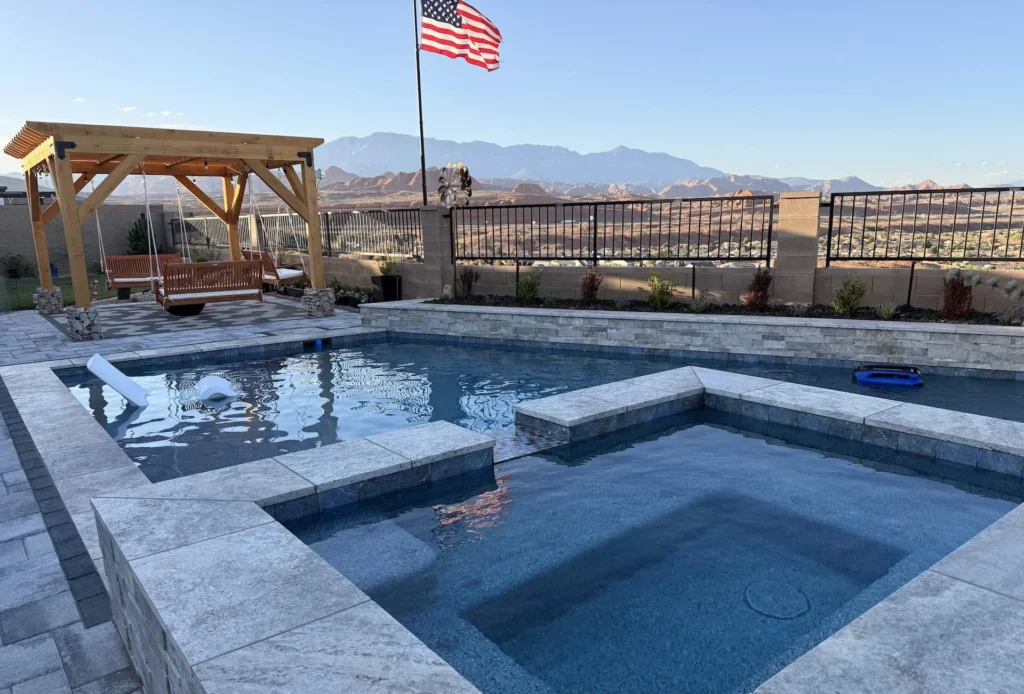
A pool surrounded by crimson canyon walls and sunbaked terrain shouldn’t look like it was dropped in from a coastal suburb. Pool designs that suit red rock and desert landscapes start with the land itself, drawing on local geology, sun exposure, and water-wise thinking to create something that feels carved from the earth rather than bolted onto it.
Key Takeaways
- Geometric and organic pool shapes can harmonize with red rock landscapes when matched to lot size, grade, and sightlines.
- Earth-toned finishes, natural boulders, and local stone materials help a pool blend into desert environments instead of clashing with them.
- Water-wise strategies like smaller surface areas, automatic covers, and efficient equipment keep operating costs low in drought-prone regions.
- Custom pools can include multiple usable areas for recreation, from tanning ledges to integrated spas and outdoor kitchens.
- Taylor Made Pools, Inc. handles design, permitting, construction, and remodeling for desert and red rock settings across Southern California, Southern Utah, and Western Arizona.
Designing a Pool That Belongs in Red Rock Country
Picture a pool tucked against the base of red cliffs near St. George, UT, its water reflecting the warm glow of sandstone at golden hour. That kind of beauty doesn’t happen by accident. Residents in desert regions need design thinking that accounts for extreme sun, scarce water, and terrain that ranges from flat decomposed granite to steep canyon slopes, drawing on pool design ideas that elevate backyard pool areas while respecting the harsh climate.
At Taylor Made Pools, Inc., every desert backyard is treated as a full outdoor living environment. Early in the design phase, the team walks the property to frame vistas of rock outcrops, canyons, or distant mesas so the pool feels integrated into its setting. Priorities center on heat management, water conservation, and low-glare finishes that won’t compete with the natural scenery your home is located near.
Pool Shapes and Layouts That Complement Desert Terrain
Shape and placement can either fight the landscape or look like a natural extension of it. Here are the ideas that work best in this area:
- Freeform pools mimic natural shapes found in nature, echoing arroyos and desert wash lines with gentle curves and irregular edges. Freeform pools can create a natural desert environment that guests and family members of all ages enjoy. A freeform design is the go-to when views are rugged and organic.
- Geometric lap pool shapes fit narrow side yards in Southern California or cliffside lots in Ivins, UT, where a straight modern line contrasts with jagged red rock. This is a smart pick when you want a clean swim lane without eating up your entire backyard.
- Compact plunge pools and hot tubs suit smaller patios in Palm Desert, CA or Bullhead City, AZ, delivering resort-style fun without a large footprint.
- Multi-level layouts on sloped lots let an upper spa spill into a lower pool, mirroring natural desert cascades while managing grade changes.
- Baja shelves provide shallow areas for relaxation in pools. A freeform pool can feature a baja shelf 15 inches underwater, bordered with stone or gravel that matches local rock to create a “desert beach” entry.
Infinity-edge pools blend seamlessly with desert horizons, making them a stunning option for canyon-view properties. For reference on scale, The Shores Resort lagoon has a surface area of 2.5 acres and the lagoon at The Shores Resort reaches depths of 8.5 feet, proving that water features in desert settings can ride a wide range of proportions.
Materials, Colors, and Finishes That Blend With Red Rock
The goal is to tie your pool’s palette to the surrounding red and tan cliffs. Use muted blue-green pool interiors for a more natural look against red rocks, and choose earth-toned finishes that reflect natural desert waterholes rather than bright tropical blues.
- Interior finishes: Pebble, quartz, and glass bead blends in warm tones like topaz, copper, and deep teal pick up the reflection of sandstone and sunset skies. Natural stone and warm earth tones help pools blend into desert environments.
- Boulders and rockscaping: Boulders can be used to create a natural pool edge. Place them strategically rather than overdoing it so they look like outcrops emerging from the deck. Natural rock waterfalls enhance pool aesthetics and ambiance, and natural rock waterfalls enhance the beauty of desert pools with sound and movement. Natural rock waterfalls can be 8 feet wide in pool designs for a dramatic yet proportional statement.
- Coping and decking: Use local stone materials for coping and decking to complement the landscape. Natural concrete pavers add earthy tones to pool designs, while travertine and flagstone in rust, sand, and charcoal hues stay cool underfoot.
- Waterline tile: Matte, stone-look waterline tiles that mirror the strata patterns seen in real canyon walls.
- Landscape design: Desert landscaping includes cactus and succulents for color. Plant agave, yucca, barrel cacti, palo verde, and desert grasses around the pool edge to blur the line between built space and native terrain.
Water-Wise Features for Desert and Red Rock Climates
Water concerns are real across Southern California, Southern Utah, and Western Arizona. Desert Color uses 40% less culinary water than typical developments, setting a sign of where regional standards are heading.
- Smaller lap pool or hybrid designs minimize evaporation while giving you plenty of space to swim and soak year-round.
- Automatic covers and windbreaks are critical. A 7 mph breeze can increase surface evaporation by roughly 300%.
- Variable-speed pumps, high-efficiency heaters, and cartridge filtration lower both water and power use.
- Smart automation lets homeowners control run times, spa heating, and lighting from their phones during cool, off-peak hours.
- Surround pool areas with drought-tolerant native plants to reduce water demand further.
Taylor Made Pools, Inc. coordinates with local jurisdictions on permits and can advise on current drought regulations-whether your project is a reservation-stage dream or ready to break ground this Saturday, backed by custom pool builders committed to excellence at every step.
Desert Comfort: Shade, Hardscape, and Nighttime Ambiance
In July and August, the hardscape and shade around your pool matter as much as the water itself.
- Shade structures: Pergolas, cantilevered overhangs, and covered patios positioned to block harsh western sun while keeping red rock ridge views open.
- Deck zones: Combine cool-deck coatings, pavers, and decomposed granite to create distinct dining, sunbathing, and fire pit areas without feeling crowded. Thoughtful layouts from a custom pool builder in Southern Utah show how desert landscaping can complement custom pool designs effectively when used to define these zones.
- Lighting: Low-voltage path lights, boulder uplights, and underwater LEDs in warm white or amber reflect off red rock faces and make the pool usable well into the evening. Incorporate fire features to enhance nighttime ambiance in desert areas-gas fire bowls or fire pits bring warmth and drama at the end of every day.
- Outdoor kitchens and BBQ islands: Site them just off the pool deck using stone veneers that match surrounding rock formations for a unified look.
Taylor Made Pools, Inc. can also remodel existing pools by reworking decking, adding a spa, and updating finishes to better fit a red rock aesthetic, as seen in their gallery of custom pool installations and remodels.
Planning, Permits, and Working With a Desert Pool Specialist
Building in rocky, sloped desert soil with extreme temperature swings requires experienced design-build oversight. Here’s what the process typically looks like with Taylor Made Pools, Inc.:
- On-site consultation to walk the lot, study grade, and search for the best vistas.
- 3D design that simulates the pool against existing rock and architecture.
- Engineering and soil testing-caliche blasting alone can add $2,000–$5,000 in the George, St. George, and Scottsdale areas.
- Permitting (typically 3–4 weeks depending on city and county).
- Construction through final plaster, usually several months start to end, with added time for extensive rock excavation or retaining walls.
Taylor Made Pools, Inc. is licensed in California (CA #795053), Utah (UT #13652711-5501), and Arizona (AZ ROC #362893), so your project meets state-specific codes at every stage as a leading custom pool company in Southern Utah. Gather inspiration photos from St. George red rock resorts, Palm Springs modern desert homes, or Colorado River retreats, then bring them to your designer so they can adapt those dreams to your lot.
Ready to start? Schedule a consultation or contact Taylor Made Pools for expert pool installation services with our team and turn your desert property into an outdoor living space worth every sunset.
FAQ
These questions address common concerns unique to desert and red rock pool projects.
How does intense desert sun affect pool design and materials?
UV exposure and triple-digit heat can fade finishes and make decks dangerously hot. Designers favor UV-stable aggregate interiors, lighter deck colors, and shade structures to keep surfaces usable in peak summer. Taylor Made Pools, Inc. specifies materials rated for desert conditions to reduce premature wear.
Can I still have a heated spa or hot tub in a drought-conscious area?
Yes. Spas and hot tubs work well when designed with smaller volumes, insulated shells, and covers that limit heat and water loss. They can share equipment with the main pool, reducing overall resource use while still providing year-round relaxation.
Are natural rock waterfalls a good idea in a dry climate?
They can be, if sized thoughtfully. Run them on timers so they operate mainly when people are outdoors. Subtler custom water features like short weirs, spa-to-pool spillways, or small boulder cascades offer sound and movement with lower water loss than tall, wide waterfalls.
What maintenance differences should I expect with a desert pool?
Wind-blown dust, pollen, and monsoon debris are common. Automatic cleaners and regular skimming keep the pool clear. Balanced water chemistry and consistent filter maintenance are especially important when temperatures swing from cool winters to 110°F-plus summers.
How long does it typically take to build a custom desert pool and backyard?
From initial design approval through final plaster, expect several months. Projects involving extensive rock excavation, retaining walls, or large outdoor living areas will add time. Permit timelines vary by city and county, and Taylor Made Pools, Inc. manages these steps to keep your project moving as efficiently as local review processes allow.