
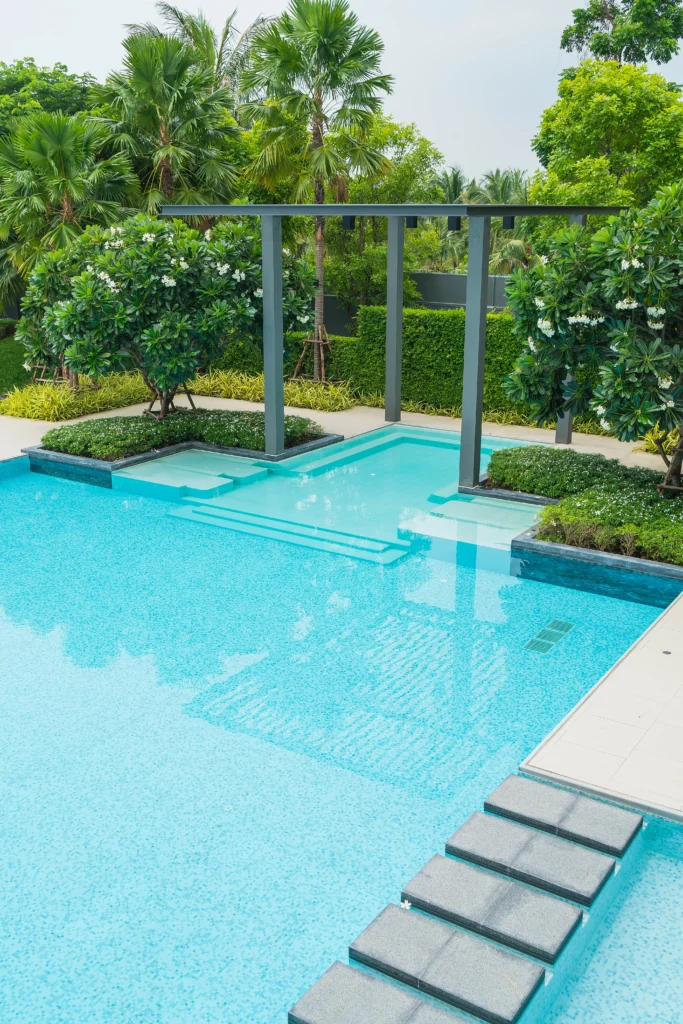
Moving to Southern Utah is an adventure. Between the towering red cliffs, the mild winters, and the endless sunshine, it is easy to see why Washington County has exploded in popularity, with the local population growing by roughly thirty-eight percent over the last decade. As the summer heat rolls into the valleys of Hurricane and Washington City, a backyard building a pool quickly transitions from a luxury to an absolute necessity for many new residents.
Many families making the move to Utah come from neighboring desert regions in California or Arizona. If you spent years dreaming of or researching custom pools in the Inland Empire, you already know how a private pool can completely change the way you experience a hot summer afternoon.
However, even if you previously hired a Palm Desert pool and spa builder to construct a backyard retreat, you will find that building in Washington County requires a completely different playbook. The beautiful desert landscape comes with unique geological and regulatory realities that can surprise unprepared homeowners. Here is what you need to know before you break ground in our unique corner of the state.
Navigating the Shifting Ground: Soils in Southern Utah
The most critical factor you must navigate is the dirt under your feet. Southern Utah is famous for its complicated soil profiles. Local builders constantly deal with blue clay, which expands dramatically when wet, and collapsible soils. Collapsible soils feel rock-hard when dry, but they have a loose, honeycombed structure underneath.
When water from pool decks, landscaping, or minor leaks seeps into the ground, these soils can lose their structure and settle by up to ten percent of their thickness. Additionally, the high concentration of soluble gypsum in local rock can dissolve over time, creating underground voids and generating weak acids that corrode standard concrete. To prevent your pool from cracking or sinking, you need specialized engineering, proper over-excavation, and sulfate-resistant Type V cement.
The HOA Factor in New Subdivisions
Beyond the dirt, you have to navigate the local neighborhoods. Many of the new subdivisions popping up in Hurricane and Washington City are governed by active Homeowners Associations (HOAs).
These HOAs often have strict rules regarding setbacks, the visibility of your pool equipment from the street, acceptable noise levels, and even the colors of your pool deck. Getting HOA approval can take weeks, and starting any excavation before you have their stamp of approval can result in heavy fines or forced construction halts. A proactive builder will help you package your design plans to meet HOA guidelines on the first submission.
Local Permitting and Utility Quirks
The local city halls also have their own distinct permitting quirks. Hurricane and Washington City have different rules regarding utility easements, setbacks from power lines, and how pool water must be drained.
For example, local power companies like Dixie Power or Rocky Mountain Power have rigid clearance requirements if overhead lines run anywhere near your property. Additionally, because water is a precious resource in the desert, understanding local water conservation rules and drainage ordinances is critical to keeping your project compliant and avoiding costly municipal fines.
Why a Licensed, Local Builder Matters
Because of these highly specific local challenges, working with a licensed, local Utah pool builder is non-negotiable. The team at TaylorMade Pools understands exactly how to handle the local geology, maintains relationships with city inspectors, and knows how to design a pool structure that will actually withstand the shifting Southern Utah earth. We design custom backyards that take into account the exact wind, soil, and sun patterns of your specific property.
Conclusion
Building a pool is an investment in your home, your family, and your lifestyle. While the process in Hurricane and Washington City has its fair share of hurdles, they are easy to clear when you have the right local partner in your corner. Taking the time to find an experienced local professional ensures your new backyard oasis remains a place of relaxation, rather than a costly engineering headache. If you are ready to start planning your desert oasis, reach out to TaylorMade Pools today.
FAQs
Do the unique soil conditions in Southern Utah make building a pool more expensive?
They can add to the upfront preparation costs. Because of the collapsible soil and active clay in Washington County, we often have to over-excavate the site and bring in engineered fill dirt. While this adds some initial expense, TaylorMade Pools prioritizes this step because skipping it leads to massive, costly structural failures down the road. It is always cheaper to build the foundation right the first time.
Why is building a pool in Hurricane or Washington City different from building one in California?
The main difference is the soil. If you previously looked into building custom pools in the Inland Empire, you likely dealt with sandy soil or standard clay. In Southern Utah, we deal with highly expansive blue clay and collapsible gypsum soils. At TaylorMade Pools, we use specialized engineering and sulfate-resistant concrete to make sure your pool does not crack or sink when the ground shifts.
Can I use the same design concepts I saw from another pool and spa builder for my new home in Washington County?
Absolutely. You can bring those exact desert-landscaping and modern pool designs to Southern Utah. The difference lies entirely in the structural engineering and local building codes. TaylorMade Pools specializes in adapting those gorgeous, wide-open desert pool aesthetics to fit the strict HOA rules and unique soil conditions of Hurricane and Washington City.
How long does it take to get HOA and city permit approval for a pool in Washington City?
Typically, the permitting and HOA approval process takes anywhere from two to six weeks. It really depends on your specific subdivision’s guidelines. TaylorMade Pools handles this entire process for you, submitting detailed plans that meet both local city codes and your neighborhood’s architectural rules to avoid unnecessary delays.
When is the best time of year to start building my pool with TaylorMade Pools?
Fall and winter are actually the ideal times to start digging. Building during the cooler months ensures that all the excavation, plumbing, and concrete curing are finished before the intense summer heat hits. Plus, starting early means your backyard will be finished and ready for swimming the moment the first hot spring day arrives.