
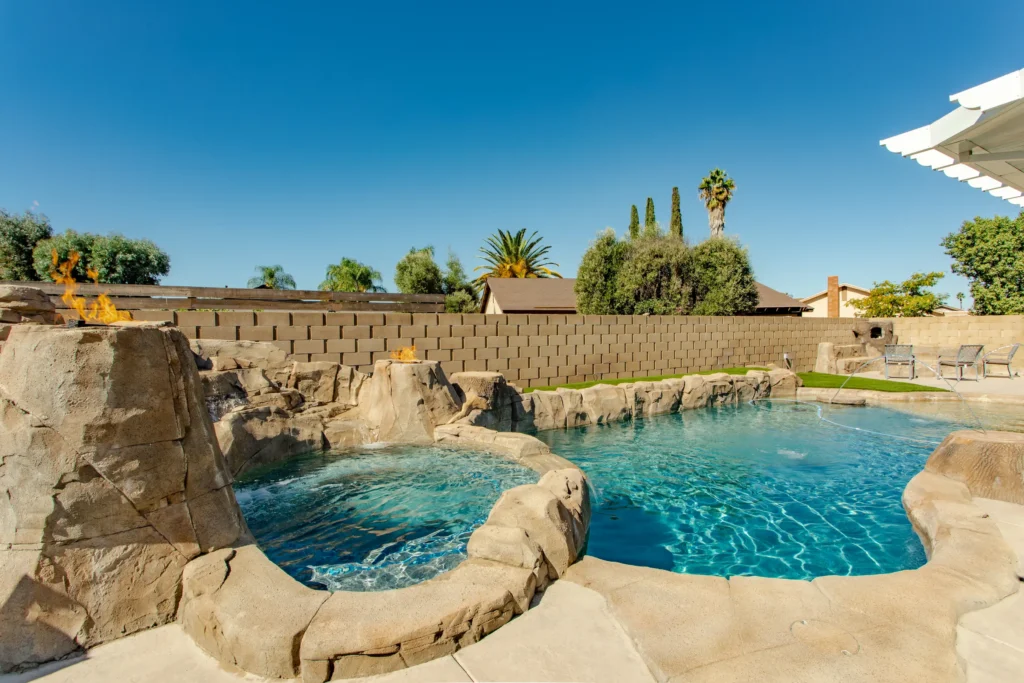
Choosing between a raised spa and a flush spa is one of the most important design decisions for any pool owner. Both options offer comfort, therapeutic value, and visual appeal, but they differ significantly in appearance, cost, usability, and maintenance. Whether you are building a new pool or upgrading an existing one, understanding the differences will help you make a smarter long-term investment.
With modern St. George spa and pool design trends focusing heavily on lifestyle customization, today’s homeowners want more than just a place to swim. They want relaxation, wellness, and visual harmony all in one outdoor environment.
What Is a Raised Spa?
A raised spa is built above the pool’s water level, typically elevated between 6 and 18 inches. It creates a distinct separation between the spa and the swimming area and often includes spillover water features that cascade into the pool.
A raised spa in pool designs is commonly chosen by homeowners seeking a resort-style appearance with dramatic water movement and increased visual depth. The elevated structure also allows for more customizable seating, jet placement, and decorative finishes like stone or mosaic tile.
Industry Insight: Luxury pool builders report that nearly 60 percent of high-end residential pools include raised spas because of their visual impact and enhanced hydrotherapy experience.
What Is a Flush Spa?
A flush spa, also referred to as a level or integrated spa, sits even with the pool and deck height. It is designed to blend seamlessly into the main pool structure, creating a unified waterline.
Flush spas are especially popular in modern builds and are often used in projects involving Backyard pool design in Corona ca, where clean lines, minimalist layouts, and efficient use of space are top priorities. This style is ideal for homeowners who want subtle luxury without a dramatic focal point.
Design Trend: Contractors note that approximately 70 percent of contemporary or geometric pools now include flush spas for their streamlined appearance.
Raised Spa vs Flush Spa: Full Comparison
1. Visual Impact and Design Style
Raised Spa
- Creates a bold architectural statement
- Adds height and visual dimension
- Allows decorative spillways and accent materials
Flush Spa
- Offers a clean and seamless look
- Works best in minimalist designs
- Keeps the pool area visually open
Raised spas draw attention and act as a centerpiece, while flush spas blend into the background for a modern and understated feel.
2. Hydrotherapy and Comfort
Raised Spa
- More enclosed seating positions
- Typically provides stronger jet pressure
- Retains heat slightly better due to elevation
Flush Spa
- Easier transition between pool and spa
- Ideal for families and seniors
- Provides a more open and social soaking experience
Health Insight: Clinical hydrotherapy studies show that regular spa use can reduce muscle stiffness by up to 30 percent. This makes jet placement and seating layout critical design choices.
3. Construction and Installation
Raised Spa
- Requires additional structural engineering
- More complex plumbing
- Higher material and labor costs
Flush Spa
- Simplifies plumbing systems
- Faster build timelines
- Better compatibility with rectangular and freeform pools
Cost Insight: On average, a raised spa can cost 2,500 to 6,000 dollars more than a flush spa due to added materials and finishing work.
4. Maintenance and Long-Term Care
Raised Spa
- More exposed tile surfaces to clean
- Spillway edges require routine inspection
- Easier equipment access in some designs
Flush Spa
- Shares cleaning routines with the pool
- Fewer exposed waterline areas
- More efficient chemical balance management
Flush spas often demand slightly less maintenance over time, especially in high-use family pools.
5. Heating Efficiency and Energy Use
Raised Spa
- Smaller water volume heats quickly
- Holds temperature well
- Ideal for quick evening sessions
Flush Spa
- Slightly higher heat loss due to surface exposure
- Works efficiently with modern variable speed pumps
Energy Insight: Variable speed pool pumps can reduce energy consumption by up to 75 percent, making spa heating more affordable when properly designed.
6. Space, Safety, and Accessibility
Raised Spa Is Best For
- Small or sloped backyards
- Homeowners wanting a dramatic focal point
- Private therapeutic soaking
Flush Spa Is Best For
- Open backyard layouts
- Families with children or seniors
- Smooth, step free entry designs
Flush spas offer superior accessibility, while raised spas provide elevated seating comfort.
Which Spa Should You Choose?
Choose a Raised Spa If You Want
- A bold visual centerpiece
- A stronger hydrotherapy experience
- Resort style spillover effects
Choose a Flush Spa If You Want
- A modern and seamless appearance
- Easier access for all ages
- Lower construction and long term maintenance cost
Final Verdict
Both raised and flush spas deliver outstanding relaxation and wellness benefits when properly designed. A raised spa offers dramatic beauty and powerful therapy, while a flush spa provides clean aesthetics, accessibility, and efficiency. The right choice depends on your backyard layout, personal style, budget, and how frequently you plan to use the spa.
Frequently Asked Questions
1. Which spa type is better for year-round use?
Both raised and flush spas can be used year round when equipped with proper heating systems. Raised spas tend to retain heat slightly better because of their elevated structure and smaller exposed surface area, making them more efficient in colder weather.
2. Does a raised spa add more value to a home than a flush spa?
In many cases, yes. Raised spas often increase visual appeal and perceived luxury, which can positively influence resale value. However, flush spas still provide strong ROI when integrated into modern pool designs.
3. Are flush spas safer for children and seniors?
Yes. Flush spas offer easier entry and exit because there are no elevated steps. This makes them a safer choice for households with small children, older adults, or anyone with mobility concerns.
4. How long does it take to heat a spa?
Most residential spas heat at a rate of about 5 to 10 degrees per hour with standard gas heaters. Raised spas may heat slightly faster due to better heat retention.
5. Can a spa be added to an existing pool later?
Yes. Both raised and flush spas can be added to existing pools, but it often requires structural modifications and updated plumbing. A professional inspection is recommended to determine feasibility and cost.